Foundations · 3 MIN READ
Teach sit, then empty your hand
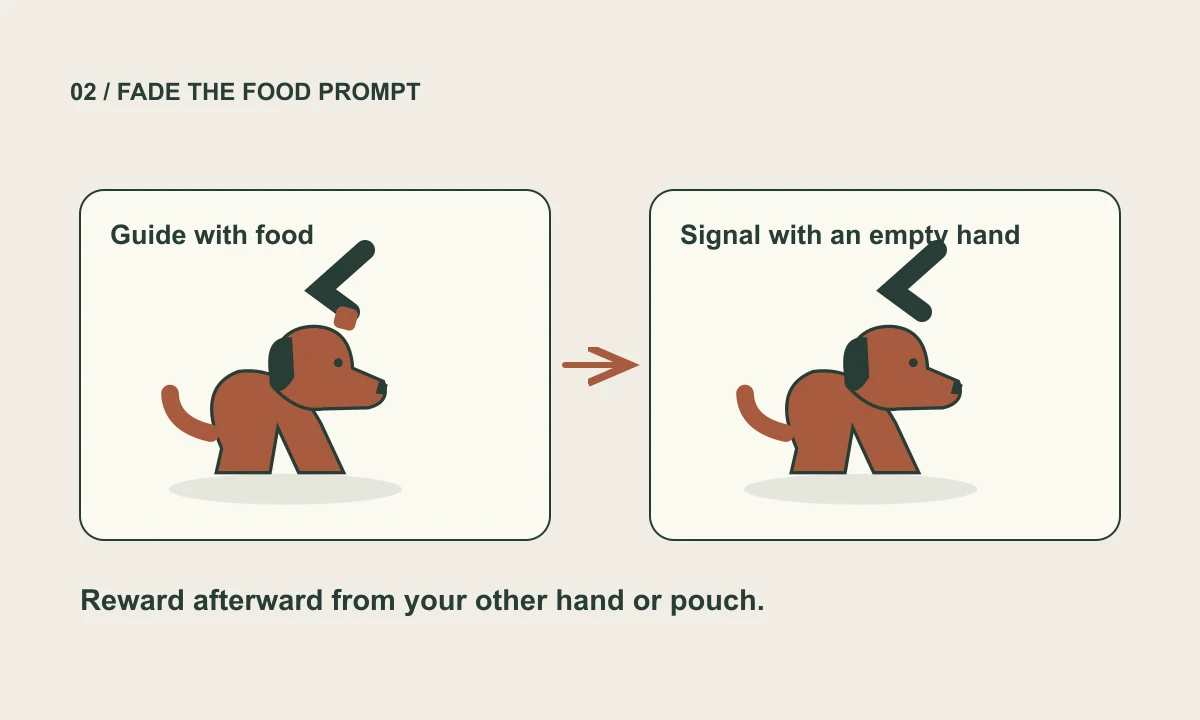
If your dog sits only when a treat is visible, change the prompt before removing the reward. A food lure can show the movement at first; an empty hand can then become the signal while food arrives afterward.
Make the movement comfortable
Use a nonslip surface and keep the dog’s body comfortable. Hold a small treat near the nose and move it gently upward and a little back, only far enough to invite a sit. Mark when the bottom touches down and reward. Do not push the dog’s hips, pull up on the collar, or keep lifting the hand until the dog jumps.
Some dogs find sitting difficult. A stand, a look toward you, or a different easy skill may be more appropriate while you discuss discomfort with your veterinarian. A training plan should fit the dog in front of you.
Fade the lure, keep the paycheck
Once the movement is familiar, try the same small gesture with an empty hand. Mark the sit and reward from your other hand or a pouch. If your dog looks puzzled, make the gesture easier to follow or briefly return to a lure before trying the empty hand again.
When the gesture reliably predicts a sit, say your chosen word once just before the gesture. Keep the timing consistent. Do not repeat “sit” over and over; that makes it harder to tell which signal the dog understood. Reduce the gesture gradually rather than changing every cue at once.
A SMALL EXERCISE
Try it with your dog
- Begin with a comfortable standing dog on a nonslip floor. Have rewards ready but avoid crowding the dog.
- Invite one sit with the smallest helpful lure. Mark and reward the completed movement.
- Try an empty-hand version when the dog anticipates the movement. Reward from elsewhere after the sit.
- Alternate easy repetitions and breaks. End if your dog moves away, repeatedly struggles, or appears uncomfortable.
FROM PRACTICE TO A USEFUL RECORD
Record it in DogWhiz
Sign in to use your own dog’s plan. On small screens, look under More for Library, Plan, History, and Household. Check the exercise title before logging; routines can contain several goals.
- Search Library for Sit and add it to your dog’s plan. Review any prerequisites the app identifies.
- During the Sit exercise, open Session setup and optional measurements. Select Prompt → Lure when food guides the movement, and check Lure used.
- For an empty-hand signal, select Hand signal and clear Lure used. Set the Verbal cue and Hand signal checkboxes to what you actually used.
- Record the result after rewarding. In Progress, review the Sit card alongside your notes; the prompt measures are software summaries, not a direct test of understanding.
If it feels difficult
If the dog jumps, lower the lure and slow the movement. If the dog backs away or will not bend comfortably, stop asking for sits. If the empty hand is confusing, shorten the gesture change instead of removing the reward.
New reluctance to sit, stiffness, or signs of pain call for a veterinary check rather than more repetitions.
Sources & further reading
These references support the training principles. Exercises and example logs are original educational suggestions, adjusted to the individual dog. App instructions were checked against the October 21, 2026 review baseline; this article has not received veterinary review.
- VCA: Puppy Behavior and Training Basics
Luring, fading food prompts, short practice and context changes.
- AAHA: Canine and Feline Behavior Management Guidelines
Reward-based training, ongoing assessment, medical causes and veterinary collaboration.