Home life · 3 MIN READ
A mat can become a place to relax
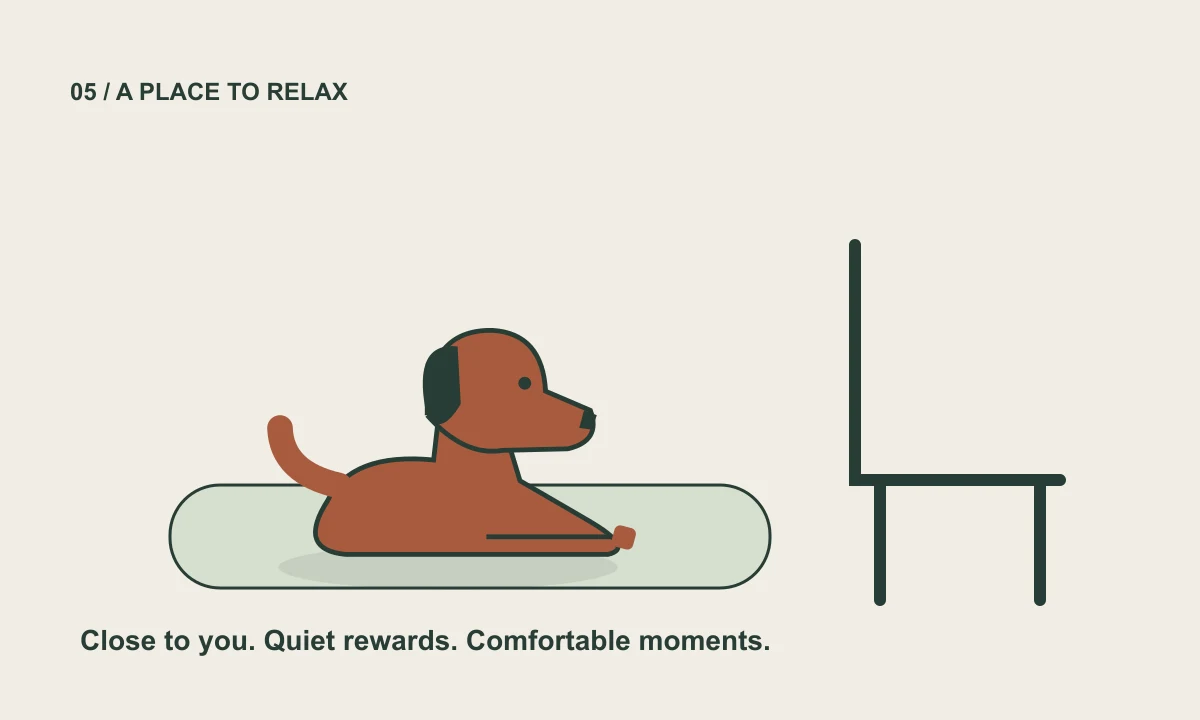
Put a comfortable mat beside your chair and reward quiet moments on it. Start close to your dog and with very little happening. The aim is a dog who can relax, not one who holds a tense pose while waiting for the next demand.
Arrival and relaxation are different skills
DogWhiz lists Place, which asks the dog to go to a mat or bed and remain until released, and Settle, which focuses on calm. These can support each other, but reaching the mat is not evidence that the dog feels relaxed.
Start with the mat near you. Reward voluntary interest, then comfortable time on it. If your dog already knows a comfortable down, you can invite one; otherwise wait for voluntary relaxation or build the movement separately. Quietly place food where the dog can take it without having to leap up.
Notice softness, not just seconds
Look for a comfortable posture, an easy shift onto a hip, or a head resting down. Keep your own movements calm. A dog who stares rigidly at a pouch may be waiting for food rather than relaxing; make the setup easier instead of simply extending the clock.
Practice separately from busy meals, visitors, or household commotion at first. Introduce only a small change when the familiar setting is easy. Let your dog leave and reset; do not pin, hold, or repeatedly send them back onto the mat.
A SMALL EXERCISE
Try it with your dog
- Place a nonslip mat near a chair in a quiet room. Sit down with a few small rewards.
- Reward calm interest in the mat and comfortable time on it. Keep the food delivery quiet.
- After a brief relaxed moment, offer a release or break. Let the dog choose whether to return.
- Gradually extend the comfortable interval before trying a more distracting setting. Shorten it again when the setting changes.
FROM PRACTICE TO A USEFUL RECORD
Record it in DogWhiz
Sign in to use your own dog’s plan. On small screens, look under More for Library, Plan, History, and Household. Check the exercise title before logging; routines can contain several goals.
- Read Place and Settle in Library. Add the goal that matches your exercise and include its prerequisites when needed.
- In the corresponding session exercise, expand Session setup and optional measurements. Record the actual Environment and Distraction.
- Use Duration seconds for the interval you observed, and Quick notes for posture and whether the dog was comfortable. Duration alone cannot describe relaxation.
- Use End early if your dog needs a break. In Plan, Pause can temporarily remove a goal from the active routine without treating the dog’s need for rest as misbehavior.
If it feels difficult
If treats make the dog frantic, try a suitable less exciting reward and a quieter moment. If the dog keeps leaving, reduce what you ask for, check comfort, and try later. Do not use a mat to keep a worried dog close to something they fear.
Provide an undisturbed resting space. Mat practice does not replace help for panic, guarding, separation distress, or pain.
Sources & further reading
These references support the training principles. Exercises and example logs are original educational suggestions, adjusted to the individual dog. App instructions were checked against the October 21, 2026 review baseline; this article has not received veterinary review.
- VCA: Teaching Settle and Calm
Mat near handler, quiet reward placement, relaxed posture, gradual difficulty.
- AAHA: Canine and Feline Behavior Management Guidelines
Reward-based training, ongoing assessment, medical causes and veterinary collaboration.