Understanding your dog · 3 MIN READ
When the world is too distracting
A dog who can respond in the kitchen may struggle beside a busy path. Change the setting before repeating the cue. More distance, a quieter location, or leaving altogether can be the most useful next step.
Observe before you ask
Look at the whole dog and the situation. Turning away, a tense body, freezing, persistent scanning, barking, or lunging can mean the current setup is too much. A single yawn or lip lick is not a diagnosis; patterns and context matter.
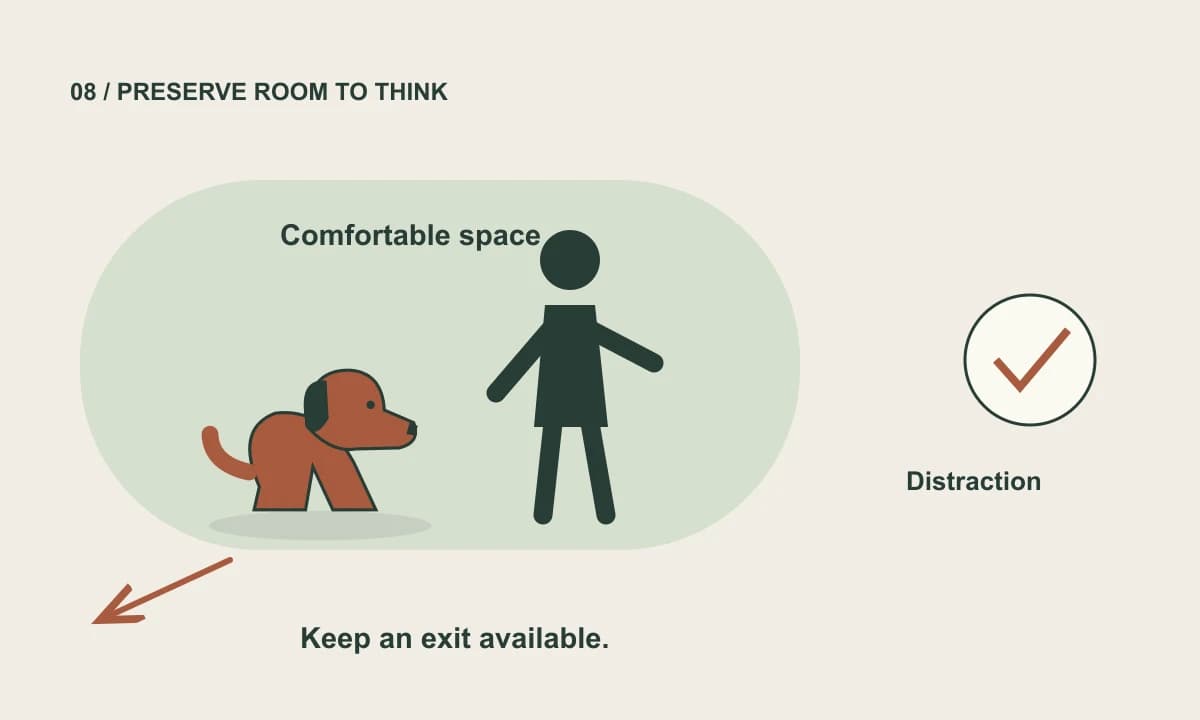
Being able to eat is useful information, but it is not the only measure of comfort. A dog can take food and still be distressed. If your dog cannot comfortably disengage, make room or leave. Avoid surrounding the dog with triggers to make them “get used to it.”
Keep ordinary practice separate from treatment
For a dog who is comfortable with a mild distraction, practice a familiar easy skill at a generous distance. Reward and stop before the setting becomes too difficult. This is generalization: learning that a familiar cue can apply in a slightly different situation.
Fear, repeated lunging, panic, and aggression need more than an obedience exercise. Your veterinarian and a qualified reward-based behavior professional can help build an individual plan, including health assessment where appropriate. DogWhiz can help you keep observations; it cannot diagnose the cause.
A SMALL EXERCISE
Try it with your dog
- Choose a quiet location and a clear exit route. Begin with a familiar easy behavior only if your dog is comfortable.
- Notice any distraction from far enough away that your dog can readily turn back and move with you.
- Reward a comfortable response, then take a break. Do not move closer just to find the point where the dog fails.
- Leave or create distance at the first signs that your dog is struggling. Arrange professional support for recurring distress.
FROM PRACTICE TO A USEFUL RECORD
Record it in DogWhiz
Sign in to use your own dog’s plan. On small screens, look under More for Library, Plan, History, and Household. Check the exercise title before logging; routines can contain several goals.
- During an appropriate training exercise, expand Session setup and optional measurements. Select the actual Environment and your observed Distraction level.
- In Quick notes, name the trigger, approximate separation, body language, and what you did. Keep trigger distance in these notes; do not put it in Distance feet, which feeds the exercise’s progress measurements.
- Use Other outcomes → Dog disengaged only when that describes the attempt. Use End early to stop the session; these controls record events, not blame.
- Compare environments in Progress. Do not interpret High or Extreme as a target you should train toward.
If it feels difficult
If the same place is repeatedly too difficult, choose a quieter route or time and reduce exposure while you get help. Do not keep collecting failed repetitions to prove the dog is reactive. Protecting a comfortable walk has value on its own.
For a bite risk, keep people and animals safely separated and consult a veterinarian and qualified behavior professional. Do not punish growling or other warnings.
Sources & further reading
These references support the training principles. Exercises and example logs are original educational suggestions, adjusted to the individual dog. App instructions were checked against the October 21, 2026 review baseline; this article has not received veterinary review.
- Cornell: Managing Reactive Behavior
Identify triggers, protect distance, avoid overwhelming exposure, seek support.
- AAHA: Canine and Feline Behavior Management Guidelines
Reward-based training, ongoing assessment, medical causes and veterinary collaboration.