Everyday skills · 3 MIN READ
Recall begins a few steps away
Begin recall where coming back is easy and safe: a quiet room or securely enclosed area, a short distance, and a reward your dog likes. A good return should lead to something pleasant, often followed by permission to explore again.
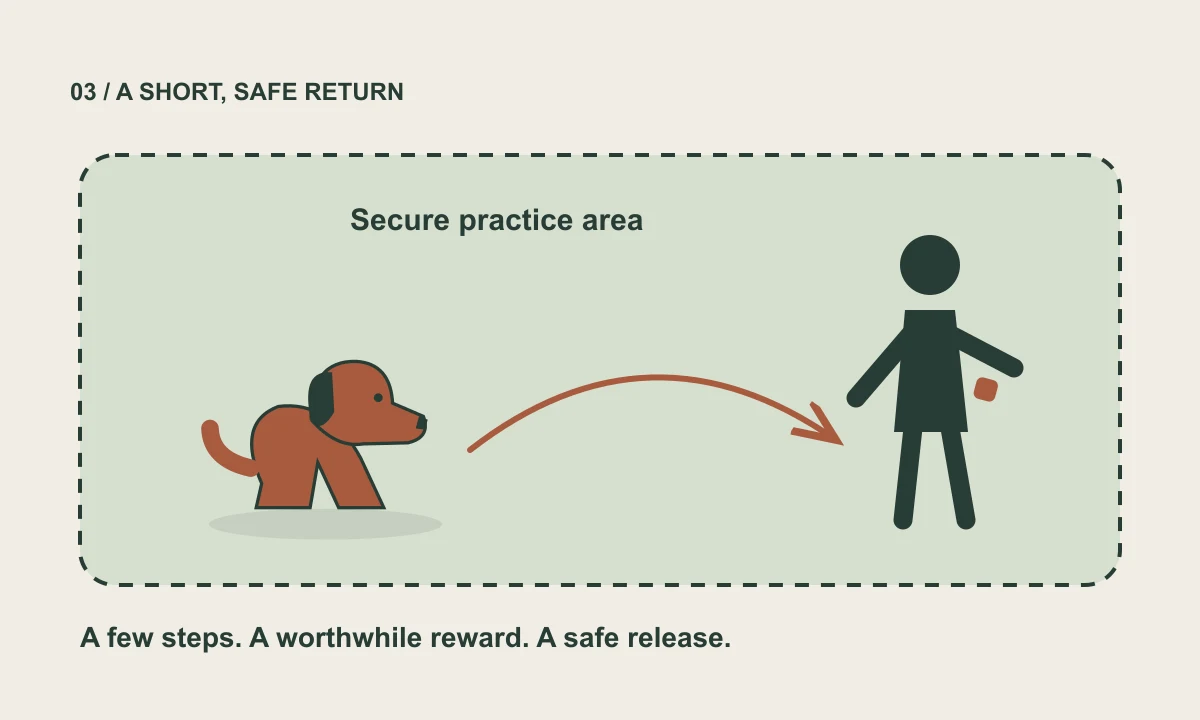
Set up a return your dog can choose
Reward spontaneous check-ins before asking for a return away from something interesting. Then practice your cue when your dog is nearby, comfortable, and likely to respond. Mark the turn toward you or arrival according to the specific exercise you are teaching, and deliver the reward close to you.
Do not chase, scold, or call your dog for something they find frightening. If the cue is followed by unpleasant surprises, future returns may become harder. Walk over calmly or use another safe management option when you cannot set up a successful practice.
Do not test safety with a statistic
DogWhiz includes both Come and Recall. Come introduces moving toward the handler; Recall is a harder goal with prerequisites. Choose the suitable starting point rather than treating the advanced title as a shortcut.
For outdoor practice, use a secure enclosure and appropriate leash management. A well-fitted harness and a safely handled long line can provide backup when suitable for your dog and space. Avoid roads, wildlife, tangles, and wrapping line around hands or limbs. No percentage in an app establishes that a dog is safe off leash.
A SMALL EXERCISE
Try it with your dog
- Start a few steps away in a quiet, secure space. Wait until your dog is available to engage.
- Say the agreed cue once. Make your body inviting without pulling the dog toward you.
- Reward at your side when the dog arrives. Release to another safe activity when appropriate.
- Repeat only while the dog is willing. Add distance on a later occasion while keeping distractions easy.
FROM PRACTICE TO A USEFUL RECORD
Record it in DogWhiz
Sign in to use your own dog’s plan. On small screens, look under More for Library, Plan, History, and Household. Check the exercise title before logging; routines can contain several goals.
- In Library, read Come and Recall, then select Add with prerequisites for the goal you choose. Plan shows which goals are active.
- During the relevant exercise, expand Session setup and optional measurements. Set Environment, Distraction, and the cue settings accurately.
- Use Distance feet for the dog’s starting distance from you. Use Response latency seconds for your estimate of time from cue to response; explain what you timed in Quick notes.
- Record every attempt you choose to log, including partial or missed responses. In Progress, compare context as well as the overall rate.
If it feels difficult
If your dog does not respond, avoid repeating the cue at increasing volume. Close the distance without chasing, reduce the distraction, and try another easy setup later. Practice should not become a series of increasingly difficult tests.
Keep physical safety measures in place regardless of training stage. For chasing, fear, or a bite risk, ask a qualified reward-based professional and your veterinarian for a tailored plan.
Sources & further reading
These references support the training principles. Exercises and example logs are original educational suggestions, adjusted to the individual dog. App instructions were checked against the October 21, 2026 review baseline; this article has not received veterinary review.
- VCA: Off-Leash Training for Dogs
Check-ins, return rewards, secure areas, leash as safety backup.
- AVSAB: Humane Dog Training Position Statement
Reward-based methods; avoid aversive training.