Home life · 3 MIN READ
One household, clearer cues
If “down” sometimes means lie on the floor and sometimes means stop jumping, your dog has an unclear problem to solve. Agree on a small cue vocabulary and what earns a reward before asking everyone to practice.
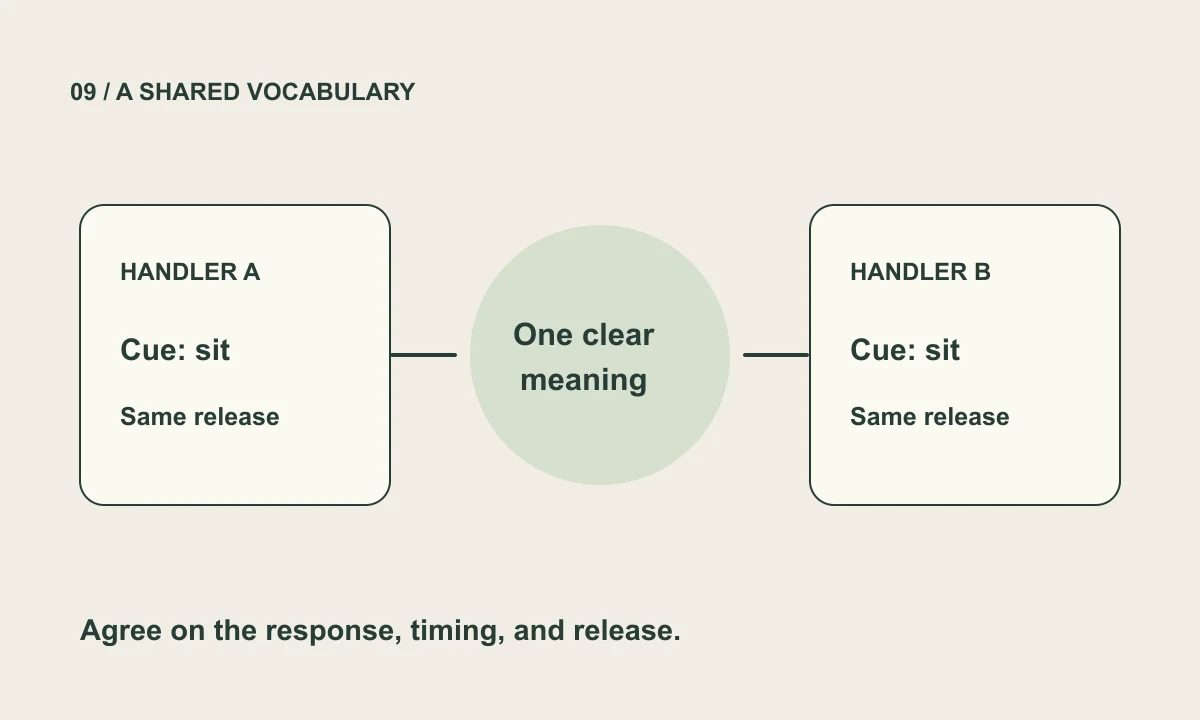
Define the response, not just the word
Write a plain description for each cue: for example, “sit” means bottom on the floor, while a separate cue can ask for paws off furniture. Decide the release and the hand signal too. Use words your household can remember without sounding alike.
A cue list is only part of consistency. Agree on reward timing, the help you will offer, and when to stop. One person’s long, difficult session should not become the standard everyone feels obliged to match.
Teach the handoff
Let a new handler begin in a familiar quiet place with a very easy version of the skill. The dog may need help even when another person gets a quick response. That is information about learning in a new context, not a reason to become firmer.
DogWhiz can flag duplicate verbal cues assigned to different behaviors. It cannot hear your tone, recognize gestures, or tell whether every family member followed the plan. Read the definitions together and use notes to explain what actually happened.
A SMALL EXERCISE
Try it with your dog
- Choose one behavior and define its visible result, cue, hand signal, reward, and release in ordinary language.
- Have one adult demonstrate a few comfortable repetitions while another watches the timing.
- Let the next handler try an easier version in the same place, with rewards ready.
- Compare observations afterward. Change a confusing word or inconsistent expectation before increasing difficulty.
FROM PRACTICE TO A USEFUL RECORD
Record it in DogWhiz
Sign in to use your own dog’s plan. On small screens, look under More for Library, Plan, History, and Household. Check the exercise title before logging; routines can contain several goals.
- Open Household; on a small screen, it is under More. Scroll to Cue definitions.
- Edit the Verbal cue field for the relevant behavior. The change is committed when you leave the field; check the app’s sync status in an account before assuming it is saved.
- Review the displayed hand signal and Release. This screen edits verbal cues; it does not offer editing controls for every displayed cue property.
- Resolve any Conflicts shown for duplicate verbal cues. During later training, use Quick notes to record handler differences and the actual signal used.
If it feels difficult
If two handlers get different responses, reduce difficulty for the newer handler and check timing. If you change a cue, teach its new meaning deliberately with rewards; editing text alone does not teach the dog a new word.
Adults should manage training and supervise children around dogs. Keep sessions voluntary and stop if either dog or person is uncomfortable.
Sources & further reading
These references support the training principles. Exercises and example logs are original educational suggestions, adjusted to the individual dog. App instructions were checked against the October 21, 2026 review baseline; this article has not received veterinary review.
- VCA: Using Predictable Rewards to Train Your Dog
Consistent cues and rewards; quiet learning before distractions.
- AVSAB: Humane Dog Training Position Statement
Reward-based methods; avoid aversive training.