Understanding your dog · 3 MIN READ
Read progress without chasing a perfect score
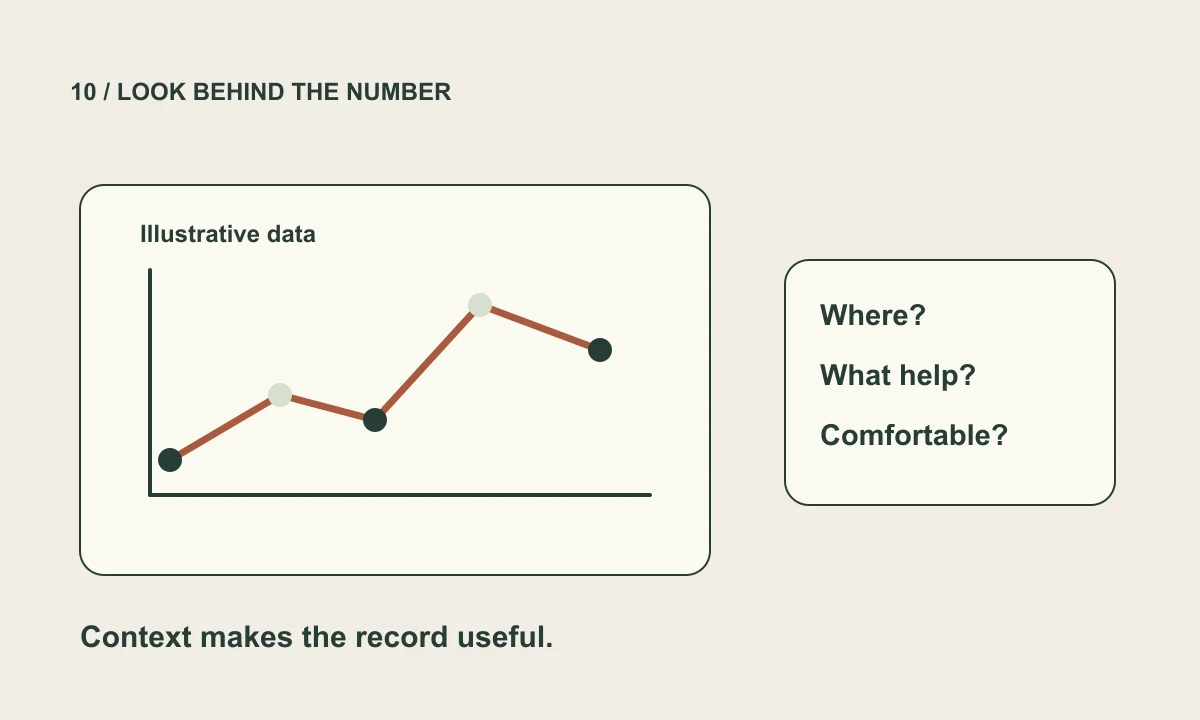
A percentage can summarize recorded attempts, but it cannot tell the whole story. Read DogWhiz progress alongside the behavior, setting, help used, and your dog’s comfort. The best next session may be easier than the last one.
Know what the software counts
In the current app, both Success and Partial success contribute to the displayed success rate. That means a high percentage does not necessarily show independent responses. Keep the distinction in your recording and explain help in Quick notes.
Progress also shows stage, duration, distance, prompt dependency, and maintenance information. These are rule-based summaries of saved data. They are not veterinary assessments, measures of the dog’s confidence, or permission to remove safety equipment.
Compare like with like
Look first at the Environment and Distraction breakdowns. A quiet living-room session and a busy park session ask different questions. Very small samples can swing sharply, and the longest duration and distance may come from different repetitions.
History helps you return to the context of saved sessions. Read it alongside the Progress card before changing the plan. Missing or selectively logged attempts can make the record look stronger than everyday behavior. Honest notes are more useful than a perfect streak.
Use maintenance as a reminder to revisit
Familiar skills benefit from occasional easy practice. DogWhiz schedules maintenance through its progress rules and can include due work in routines. The displayed date is a software suggestion, not a deadline the dog has to meet.
If a skill becomes harder, check the setting and the dog’s physical comfort. Reduce the challenge, keep rewards available, and review the observation with a professional when the change is sudden or concerning. A lower stage can be a prompt to offer support rather than a reason to drill more.
A SMALL EXERCISE
Try it with your dog
- Pick one behavior and read its recent context before looking at the overall percentage.
- Choose one small next step: less distraction, a shorter duration, or an easier prompt change.
- Practice briefly and record what actually happened, including help and breaks.
- Revisit the record later. Decide whether your next setup should repeat, simplify, or gently progress.
FROM PRACTICE TO A USEFUL RECORD
Record it in DogWhiz
Sign in to use your own dog’s plan. On small screens, look under More for Library, Plan, History, and Household. Check the exercise title before logging; routines can contain several goals.
- Open Progress and find the behavior card under Detailed progress reports. Read Success rate with Environment and Distraction.
- Check Duration, Distance, Prompt dependency, and Next maintenance together with your notes; no single field proves mastery.
- Open History to review saved activity. If needed, use its dog and behavior filters to focus your review.
- In Plan, use Pause for a goal that should temporarily leave active practice. Use End early during training when the dog needs to stop.
If it feels difficult
If progress looks better than behavior feels, review how you classified partial responses and which contexts you practiced. If it looks worse after a location change, restore an easier setup. Avoid collecting extra repetitions merely to raise a number.
Sudden regression, reluctance to move, irritability, or other behavior changes can have medical causes. Consult your veterinarian rather than treating every change as a training problem.
Sources & further reading
These references support the training principles. Exercises and example logs are original educational suggestions, adjusted to the individual dog. App instructions were checked against the October 21, 2026 review baseline; this article has not received veterinary review.
- VCA: Lifelong Training for a Well-Behaved Pet
Revisit familiar skills instead of interpreting lapses as defiance.
- AAHA: Canine and Feline Behavior Management Guidelines
Reward-based training, ongoing assessment, medical causes and veterinary collaboration.