Everyday skills · 3 MIN READ
Loose-leash walking starts with three steps
You do not need a perfect walk around the block to start teaching a loose leash. Find a quiet patch, reward a little slack, and take a few easy steps together. A sniff break can be part of the reward.
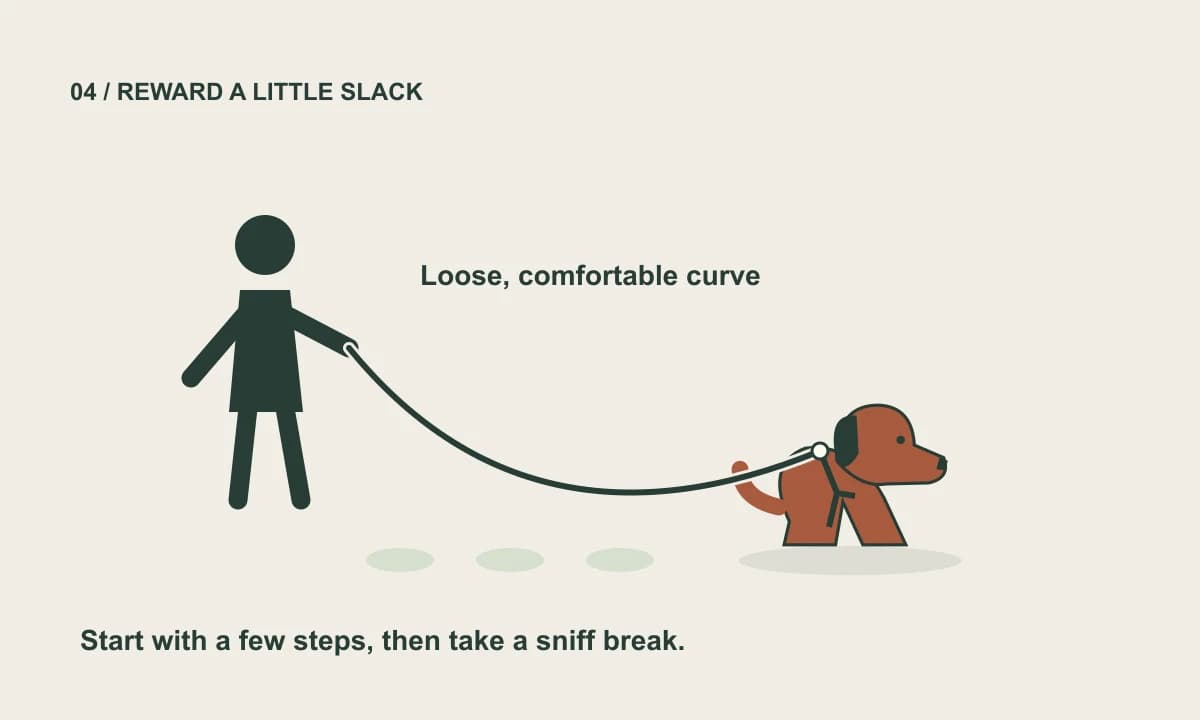
Reward the position you want to repeat
Choose comfortable, properly fitted walking equipment and a safe, low-traffic space. Start with your dog near you and the leash hanging without tension. Reward near your leg for a loose leash or a voluntary check-in. Take a step, then reward again before your dog reaches the end.
Loose-leash walking is not the same as a formal heel. Leave room for normal sniffing and a comfortable gait. The useful question is whether the leash stays relaxed in this setting, not whether the dog is staring at you throughout the outing.
When the leash tightens
If it is safe, pause or gently change direction to create room. Reward when slack returns. Do not jerk the leash, pull the dog into position, or wait beside something frightening just to insist on compliance.
If your dog cannot turn away from a distraction, create more distance or leave the area. Management counts: a quieter route, a different time, or a shorter outing may make practice possible. Meet exercise and toileting needs without making every minute a training test.
A SMALL EXERCISE
Try it with your dog
- Pick a quiet area away from traffic. Have a few small rewards accessible before moving.
- Reward one moment of slack beside you. Take one to three steps and reward again while the leash remains loose.
- Offer a safe sniff break. Reset only when your dog is ready.
- After several easy stretches on separate outings, slowly lengthen one stretch. Keep the surroundings familiar while you change the distance.
FROM PRACTICE TO A USEFUL RECORD
Record it in DogWhiz
Sign in to use your own dog’s plan. On small screens, look under More for Library, Plan, History, and Household. Check the exercise title before logging; routines can contain several goals.
- Add Loose Leash Walking from Library. Use Add with prerequisites if you need its foundation goals.
- During that exercise, set Environment to the actual location and Distraction to the level you observed.
- In Distance feet, record the length of the successful practice stretch if that is what you are measuring. Explain that choice in Quick notes; the field does not automatically track your walk.
- Record Reward and the outcome after you have safely stopped. Review the behavior’s Environment and Distraction breakdowns in Progress.
If it feels difficult
If tension appears every few steps, reward sooner and shorten the stretch. If food is hard to deliver while walking, stop in a safe place to reward. Keep your attention on the dog, traffic, and leash rather than on the phone.
If pulling compromises your balance or your dog lunges toward people or animals, choose safe management and get professional help before practicing in public.
Sources & further reading
These references support the training principles. Exercises and example logs are original educational suggestions, adjusted to the individual dog. App instructions were checked against the October 21, 2026 review baseline; this article has not received veterinary review.
- VCA: Controlling Pulling on Walks
Reward slack; move away from overwhelming distractions; no leash corrections.
- Cornell: Managing Reactive Behavior
Identify triggers, protect distance, avoid overwhelming exposure, seek support.