Everyday skills · 3 MIN READ
Leave it without a tug-of-war
Leave it means turning away before taking something. Teach that choice with safe practice objects and a reward from somewhere else. It is different from Drop It, which asks a dog to release an object already in the mouth.
Set up success before adding the cue
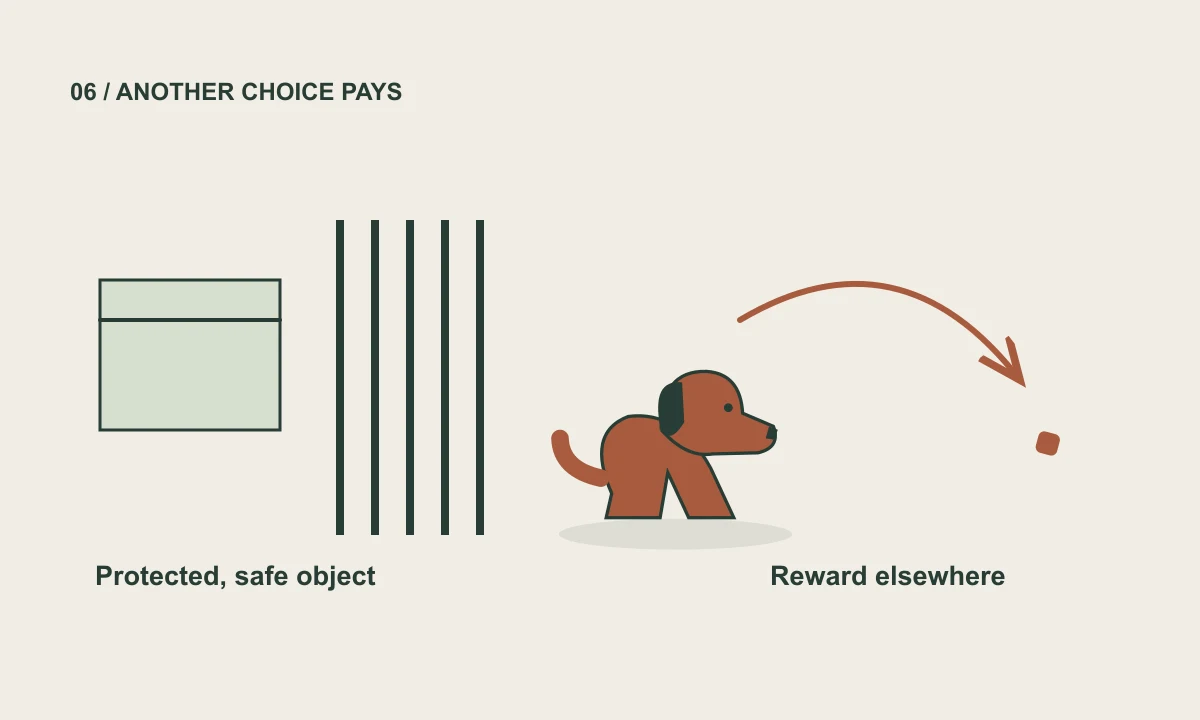
Start with something harmless and unexciting, protected so the dog cannot swallow it. Keep enough space that the dog can notice it without grabbing or becoming frustrated. Reward a voluntary look away with food from your other hand or a pouch.
Once turning away is predictable, say your chosen cue just before the dog makes that choice. Mark the disengagement, reward away from the practice item, and reset at an easy distance. The dog does not need to stare at forbidden food for a long time to learn this.
Use management around real hazards
Pick up dropped medication, block access to bins, and keep dangerous foods out of reach. Training does not make a hazardous item a safe prop. Do not practice with anything sharp, toxic, valuable, or likely to be swallowed.
If a dog already has an object, do not turn the situation into a chase or pry open the mouth as a lesson. A separately taught trade or Drop It may help in ordinary safe situations. Guarding, freezing over objects, or a bite risk needs a professional plan rather than a harder leave-it drill.
A SMALL EXERCISE
Try it with your dog
- Place a safe, low-interest object out of reach, or behind a secure barrier. Begin far enough away for your dog to disengage easily.
- Wait for a glance away from the item. Mark and deliver a reward away from it.
- After easy repetitions, introduce your cue just before the familiar turn away.
- Finish with the item still inaccessible. Increase difficulty gradually on another occasion, rather than exposing something dangerous as a final test.
FROM PRACTICE TO A USEFUL RECORD
Record it in DogWhiz
Sign in to use your own dog’s plan. On small screens, look under More for Library, Plan, History, and Household. Check the exercise title before logging; routines can contain several goals.
- Search Library for Leave It and read its prerequisites. Add the goal to your plan, or use Add with prerequisites.
- During the Leave It exercise, open Session setup and optional measurements. Record Environment, Distraction, and the prompts you used.
- In Quick notes, identify the safe object, how access was prevented, the approximate separation from it, and the point you counted as turning away. Keep object separation in notes rather than the Distance feet field, which feeds exercise progress.
- Score the response against the displayed exercise’s Success criteria. Record the prompt help separately; an early learning step may allow a clear prompt. Choose Partial success when the response only partly meets the current criteria, and read Progress with your notes.
If it feels difficult
If your dog fixates, paws at the barrier, or cannot turn away, move farther back or choose a less interesting item. If frustration rises, end the exercise. Make the next setup easier instead of repeating the cue against stronger temptation.
If your dog may have swallowed a toxin or dangerous object, contact a veterinarian or animal poison service promptly. Do not wait to see whether a training cue works.
Sources & further reading
These references support the training principles. Exercises and example logs are original educational suggestions, adjusted to the individual dog. App instructions were checked against the October 21, 2026 review baseline; this article has not received veterinary review.
- AVSAB: How to Teach Leave It
Voluntary disengagement from a safe item and rewarding from another source.
- AVSAB: Humane Dog Training Position Statement
Reward-based methods; avoid aversive training.